

Intro to Spiritual Practices
Spiritual practices are activities or postures that we take in our everyday life that allow us to notice and experience God’s grace. They are not confined to a special place or time. They are what we do every day. They are how we wake up and come alive to the spiritual reality all around us. God is here. God’s grace is present, moving, and working in our lives. Practice is the path we travel on our spiritual journey, therefore everything we do can be a practice.
Intro to the Psalms
The Book of Psalms is a collection of 150 poems, originally used in worship. I think it is important to note that they were used in worship because the Psalms contain such a wide range of emotions.
No matter what we are feeling -- distress, trust, anger, or delight, we find the words of the psalms can accompany us into God's presence. In the Psalms, we find words to express every conceivable human condition and feeling. These poems, turned into prayers, give us words to glorify, confess, hope, ask, and even curse. They give us permission to share our whole being with God.
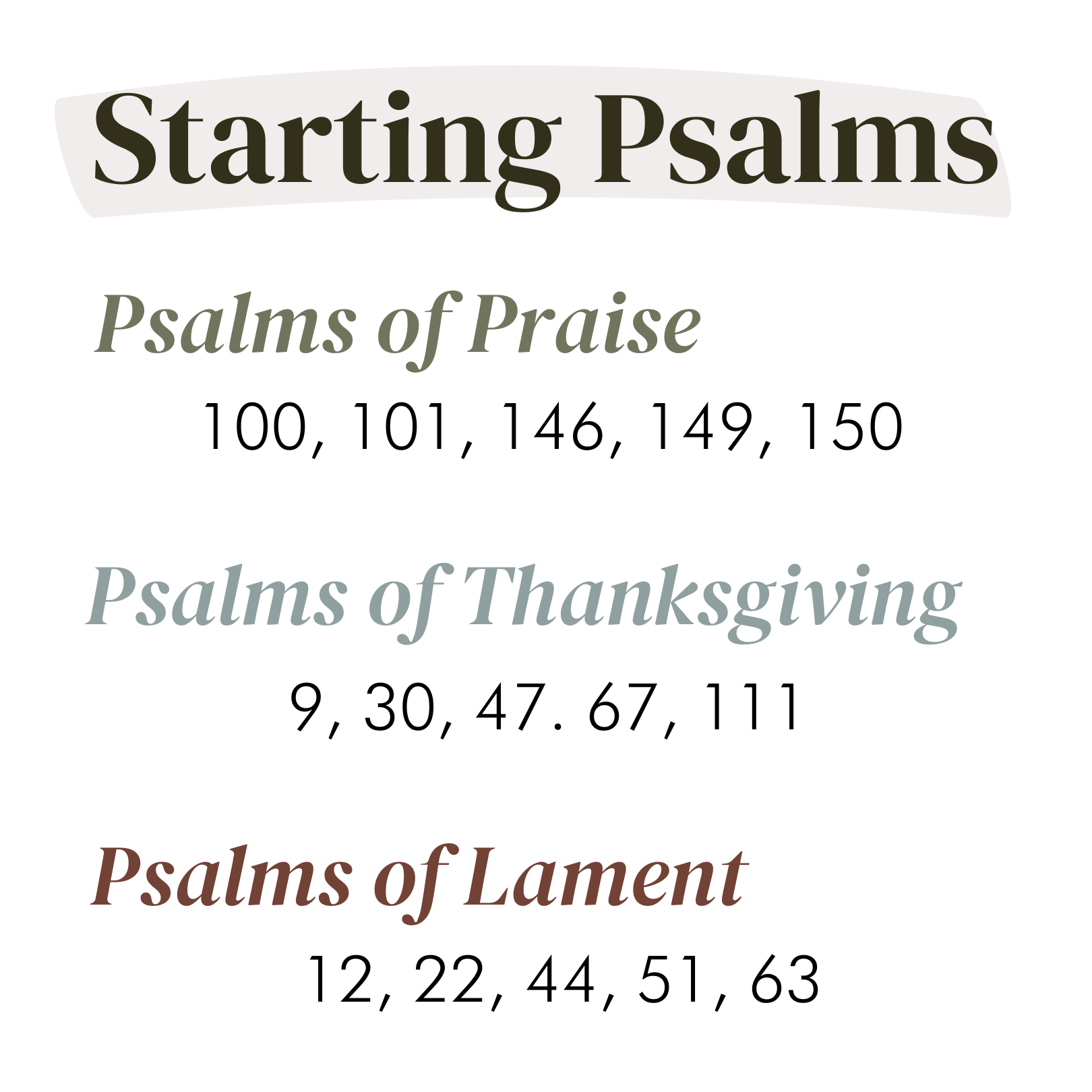
Old Testament theologian, Walter Brueggemann, talks about life and faith in three main phases (which just happen to correlate with the three main categories of Psalms).
Securely Oriented - These are the seasons in our lives when things are going great! We are just bee boppin’ right along. The sun is shining. The birds are chirping. Life is good. This phase of life and faith correlates with psalms of praise.
Disorientation - These are the seasons in our lives when chaos ensues. The reality is that life is hard and messy. Relationships are complicated and dysfunctional. This is when it feels like we are going one step forward and two steps back. When we cannot win for losing. TRUTH BOMB: We live most of our lives in this phase. Though social media deceives us and we like to act like we have our lives together. Chaos is really the human condition. Disorientation correlates with Psalms of lament, and it is likely no surprise that there are more psalms of lament than any other type of psalm.
Re-Orientation - These are the seasons in our lives when we find our footing again. We are not going back to what life was like before our disorientation. God does not take us back, but instead, we have found a new place to re-orient ourselves. The correlating psalms for re-orientation are psalms of thanksgiving.
Brueggeman suggests that throughout life, we find ourselves in one of these three phases.
So what does this have to do with praying the Psalms?
Well, STEP ONE is being honest about what phase you are in. It is a call to be vulnerable, at least with yourself, about how you truly feel.
Brueggemann says, “Thus I suggest that most of the Psalms can only be appropriately prayed by people who are living at the edge of their lives, sensitive to the raw hurts, the primitive passions, and the naïve elations that are at the bottom of our life. For most of us, liturgical or devotional entry into the Psalms requires a real change of pace. It asks us to depart from the closely managed world of public survival, to move into the open, frightening, healing world of speech with the Holy One.”1
Question: What does living at the end of your life look like?
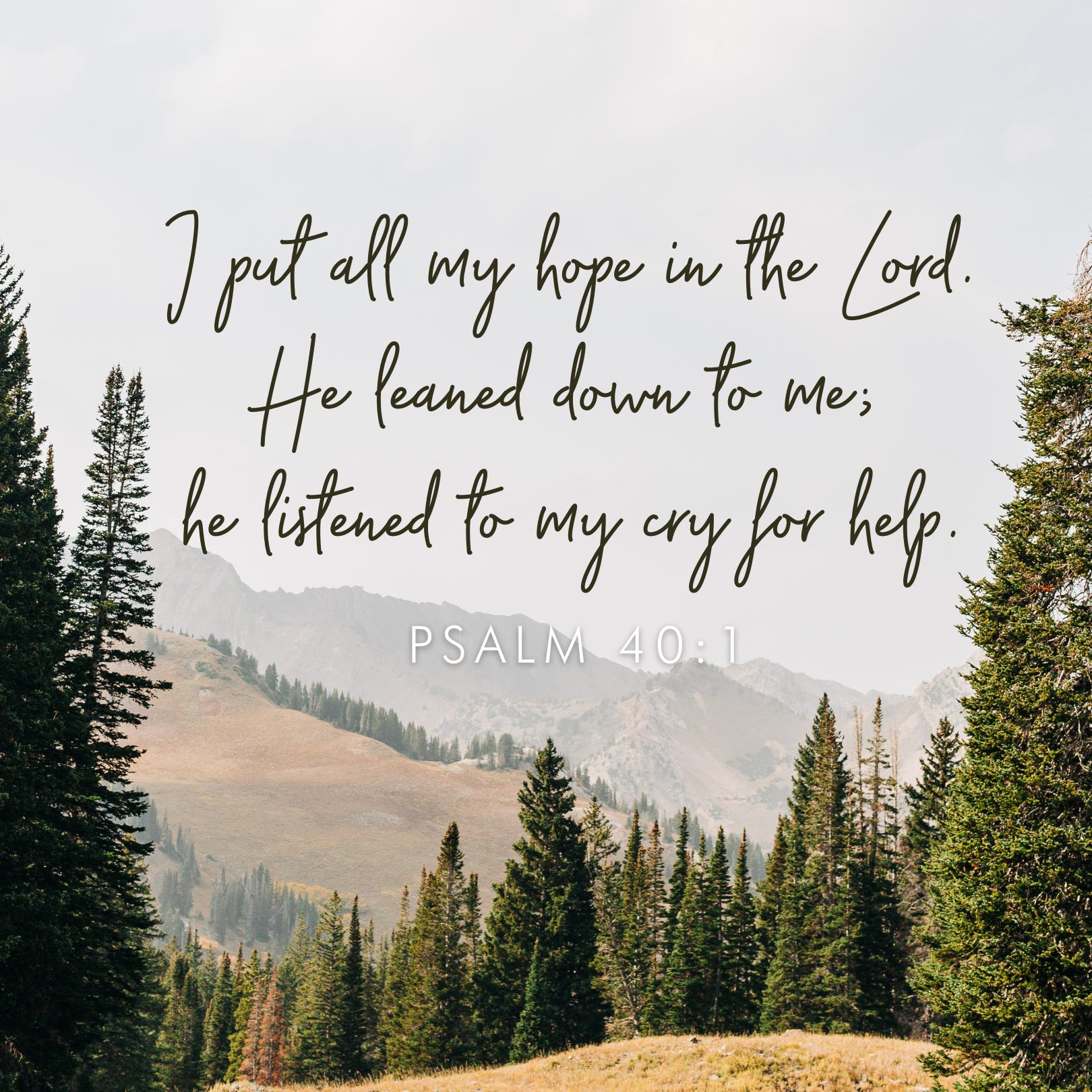
Reading for Transformation VS Information
From the time we are in grade school, we are taught to read for information. We read to comprehend and to understand. We literally take reading comprehension tests.
When praying the psalms, however, we do not want to read for information. We want to read for transformation. Forget who wrote it and the context for which it was written. We want to enter into the Psalm as if the words are our own. Allow the scripture to settle deep into your soul. Let the metaphors seep down in between the cracks and take root. Praying the Psalms gives us permission to become the psalmist – not in a literal sense, but in a way that meets us where we are.
Enter into the metaphors, not trying to understand or explain, but to feel them.
Quick Metaphor Exercise:
Psalm 23:5 (CEB) You set a table for me right in front of my enemies. You bathe my head in oil; my cup is so full it spills over.
When I was reading this psalm, I underlined the phrase — you set a table for me. Allow yourself to reflect creativity, and prayerfully on the phrases that stand out to you.
Think to yourself:
Why do you set a table?
What does it mean to set a table?
When and where do you set a table?
Reflections: You set a table to make people feel welcome. You set a table at special events. Setting a table takes work.
Now what does it feel like to read, you set a table for me?
God set a table for me.
Wow.
Brueggeman says, “So how shall we pray these psalms? I suggest that praying for them requires the location of experiences in our own lives and in the lives of others when such inclinations and realities of disorientations were singing among us. The events of a bed full of tears, of a body full of disconnectedness, of a plate full of salty tears, of a day full of trampling — these are events not remote from us.” 2
Steps for Praying the Psalms:

Center yourself. Reflect on where you find yourself in life — securely oriented, disorientation, or re-orientation. What weighs heavy on you? What offers you hope? What are you feeling right now? Be honest about where you are.
Select a psalm and read it slowly. Read it not for understanding, but for transformation. Be imaginative. Digest each word and phrase. Apply it to your personal life. Enter into the metaphors.
Identify the emotions present in the psalm. What do you relate to? Can you remember a time when you felt the same way?
Read the Psalm again. If you are having trouble being present, then write the Psalm out.
Reflect & Journal on the following questions:
What images and metaphors in this psalm speak to me?
To what situation in my life does this psalm speak?
What in my own life and experience can I bring to this psalm?
What surprised me in this psalm?
What word or phrase stood out to me in this psalm?
How are you letting go of the 'public image' in order to speak openly with the Holy One?
Tip: If you’re having trouble, try using The Message. It is a modern paraphrase of the scripture that uses language we are more familiar with.
Take time to share and connect with others in the comment section. What did you learn? What surprised you? What are you excited about?
Have questions for me? Don’t hesitate to respond to this email or drop them in the comments below!
Brueggemann, Walter. Praying the Psalms, Second Edition: Engaging Scripture and the Life of the Spirit. Cascade Books, an imprint of Wipf and Stock Publishers. Kindle Edition.
Brueggemann, Walter. Praying the Psalms, Second Edition: Engaging Scripture and the Life of the Spirit. Cascade Books, an imprint of Wipf and Stock Publishers. Kindle Edition.